

Red Wing
The Boot on the Beam
How Red Wing built boots for hard work—and kept the making close to home.
Manufacturing | 6 Min Read
Photo: binary Ego
Some things are built to wear in, not wear out.
The ground gives nothing back in winter. It stiffens leather, seeps through seams, and turns every step into something you feel by the end of the day. Out there, a boot isn’t an accessory. It’s the difference between finishing the work or stopping early.
Before there was any notion of heritage, there was only repetition. Long days, uneven ground, and the slow realization that most things wore out faster than they should. The problem wasn’t abstract. The work stayed hard. The boots didn’t always keep up.
Persistence & Process
Improvement Measured in Wear
Red Wing didn’t become what it is through a single breakthrough. It was built through a series of adjustments—stronger construction, better fit, safer designs—each one responding to how boots actually failed in the field. Steel toe protection arrived in the 1930s, addressing the risks of industrial work directly. Decades later, urethane sole technology improved durability and cushioning for workers spending long hours on hard surfaces. The pattern stayed consistent: observe failure, refine the solution, and repeat.
That process required a certain discipline. A boot has to be imagined not as it looks new, but as it performs after months of use—wet, worn, and under strain. Every change had to account for that future condition. Over time, those small corrections accumulated into something more durable than any single feature.
How It’s Made
Leather, Stitching, and Control Over the Outcome
Much of Red Wing’s identity still centers on how its boots are made and where that work happens. Leather comes from its own tannery in Red Wing, Minnesota, where hides are processed with specific use in mind. That proximity allows for tighter control over quality, consistency, and performance.
Construction follows the same logic. Techniques like Goodyear welt construction and triple stitching are used not because they are traditional, but because they hold up under stress and allow the boot to be repaired. Production continues in Red Wing, along with facilities in Missouri and Arkansas, forming a network that keeps much of the process domestic. The system isn’t built for speed. It’s built for control—of materials, of construction, and of the final result.
Trust Earned Through Use
What Holds Up After the Break-In
Trust in a product like this isn’t immediate. It builds over time—through long days, repeated wear, and the gradual shaping of the boot to the person wearing it. Models like the Iron Ranger and Classic Moc were originally designed for miners, sportsmen, and factory workers, and their construction still reflects those demands.
The leather softens, the sole settles, and the fit becomes specific to the wearer. Wear isn’t treated as failure. It’s part of the design. The value of the boot comes from how well it continues to perform once it has been broken in and pushed beyond its first use.
Cultural Impact
A Place That Kept the Work Visible
In Red Wing, Minnesota, the company is part of the town’s identity. Its museum holds artifacts from its history—early designs, military boots, and a massive oversized boot that has become a local landmark. It reflects something simple but rare: a community that recognizes its manufacturing history as worth preserving.
That connection extends beyond display. The company’s Wall of Honor preserves worn boots alongside the stories of the people who used them—workers whose lives were spent in trades that rarely draw attention. Over time, the boots themselves moved beyond the jobsite into broader culture. But even there, their meaning remains tied to use, not image.
We may earn a commission from purchases made through the links below.
Featured American-Made Gear
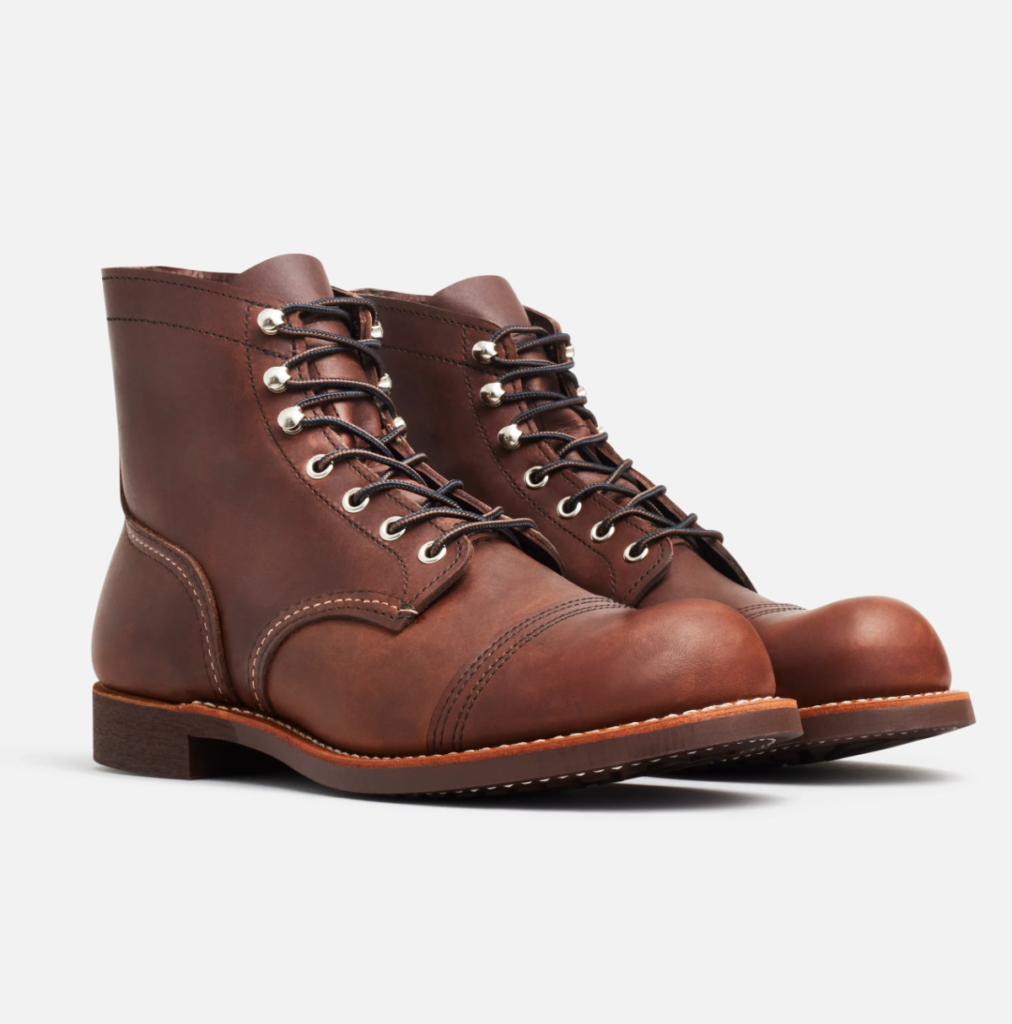
Photo Credit: Red Wing
Iron Ranger
Originally developed for iron miners, this boot uses thick leather, welt construction, and triple stitching to prioritize durability and long-term wear.
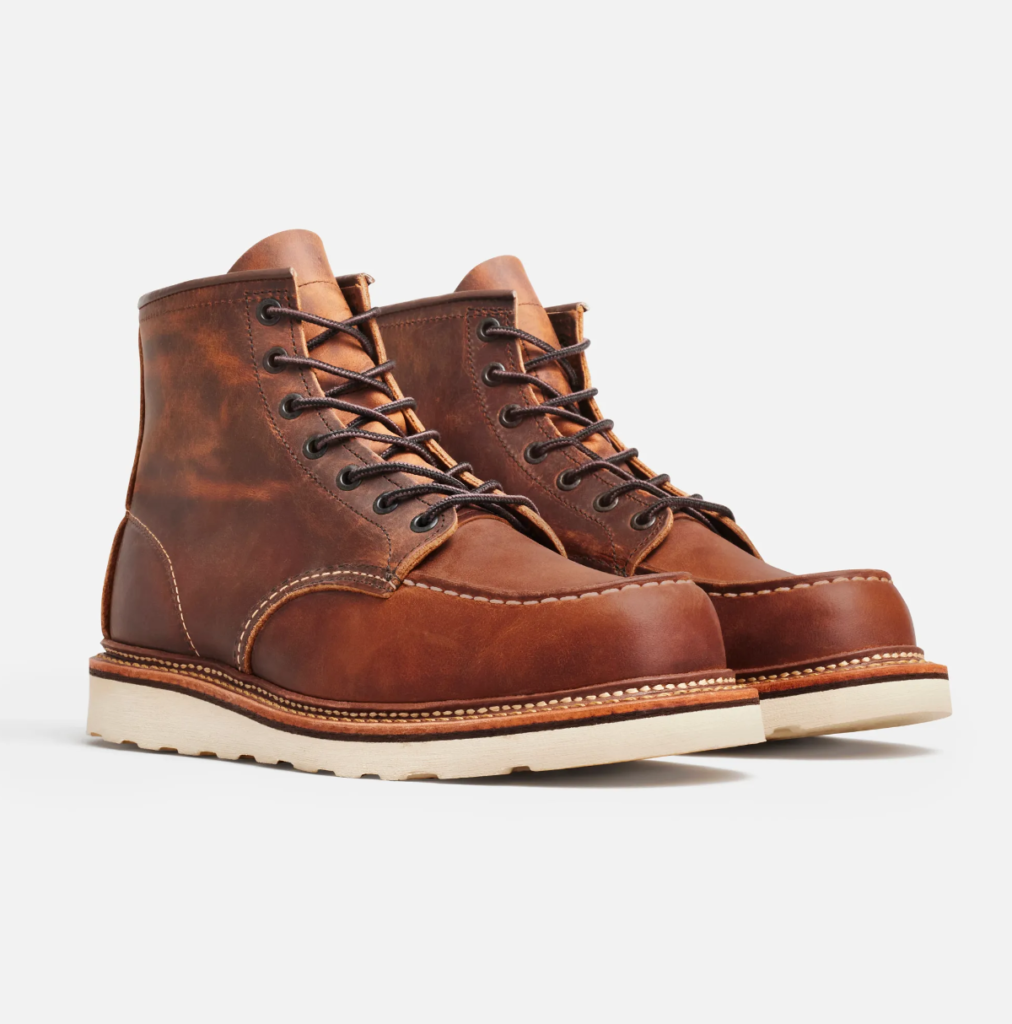
Photo Credit: Red Wing
Classic Moc
First introduced in the 1950s, the Classic Moc pairs a distinctive toe shape with a wedge sole designed for traction and stability on hard surfaces.
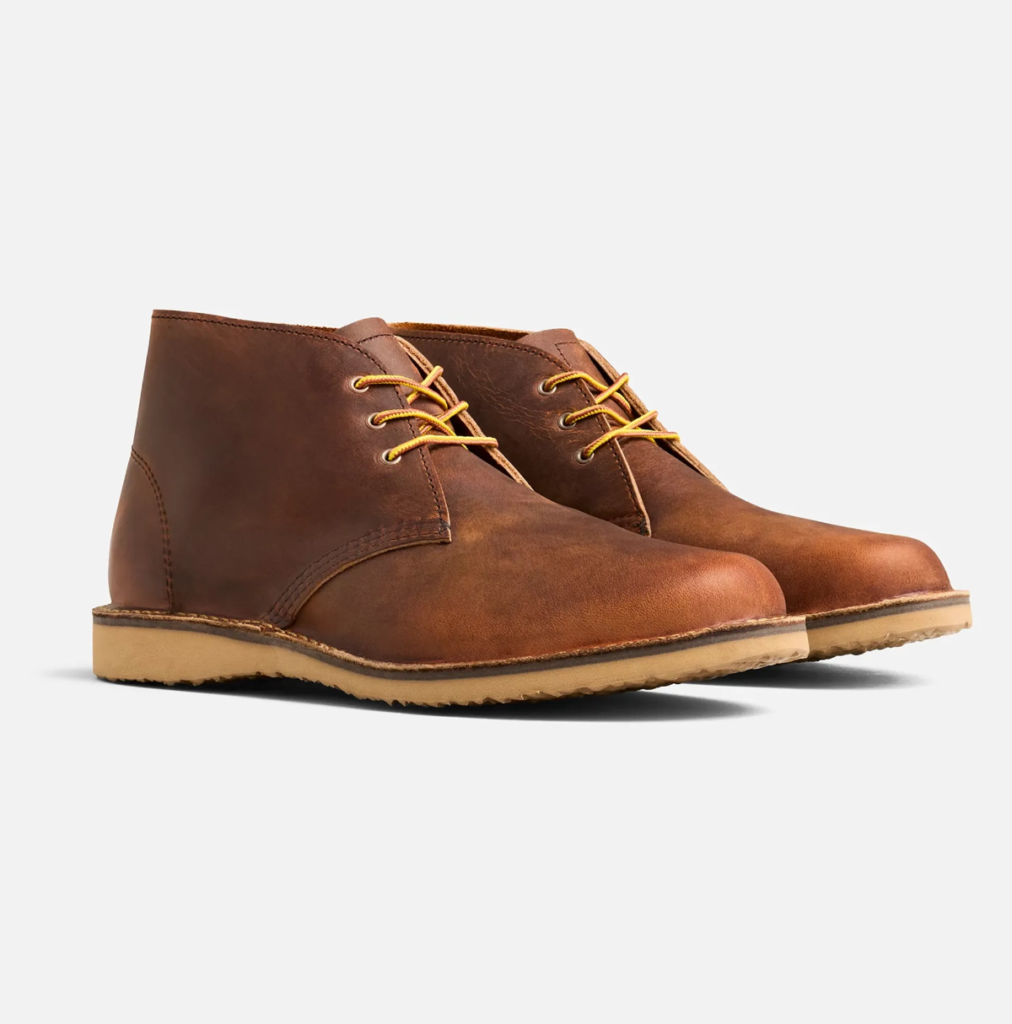
Photo Credit: Red Wing
Weekender Chukka
Introduced as a lighter alternative to traditional work boots, the Weekender Chukka pairs flexible leather with a stitchdown construction designed for comfort and ease of wear.
Reflection
What It Means to Keep Something
There’s a difference between something that lasts and something that stays with you. The first is about materials. The second is about experience. Over time, a well-used object begins to carry evidence of where it has been—creases, wear, small repairs that extend its life.
Red Wing’s boots tend to fall into that second category. They are not preserved. They are used, and that use becomes part of what they are.
Read More American Made Stories
-
Lodge Cast Iron: Cast in Continuation
Some things are made to last because the people who make them choose not to stop. The skillet doesn’t change much once it’s made. It holds heat, distributes it slowly, and responds the same way each time it’s used. What changes is everything around it—the ingredients, the hands that lift it, the kitchens it passes…
-
Darn Tough Vermont: The End Is Included
A promise means more when failure is expected and still fully accepted. The socks were failing somewhere between departure and return, though it took time to understand exactly where. On long backpacking trips through Europe in the late 1970s, they would wear thin faster than expected, softening, slipping, and eventually breaking down under miles of…
-
Leatherman: Built from a Breakdown
Every tool begins as a problem that refuses to stay unsolved. The car didn’t fail all at once. It unraveled in pieces—loose bolts, slipping components, small mechanical issues that appeared without warning and refused to resolve themselves. Each one was manageable in isolation, but only if you had the means to address it when it…

Get More American Made Stories in Your Inbox
Occasional stories about American makers, products, and the people behind them. No spam, just good stories.